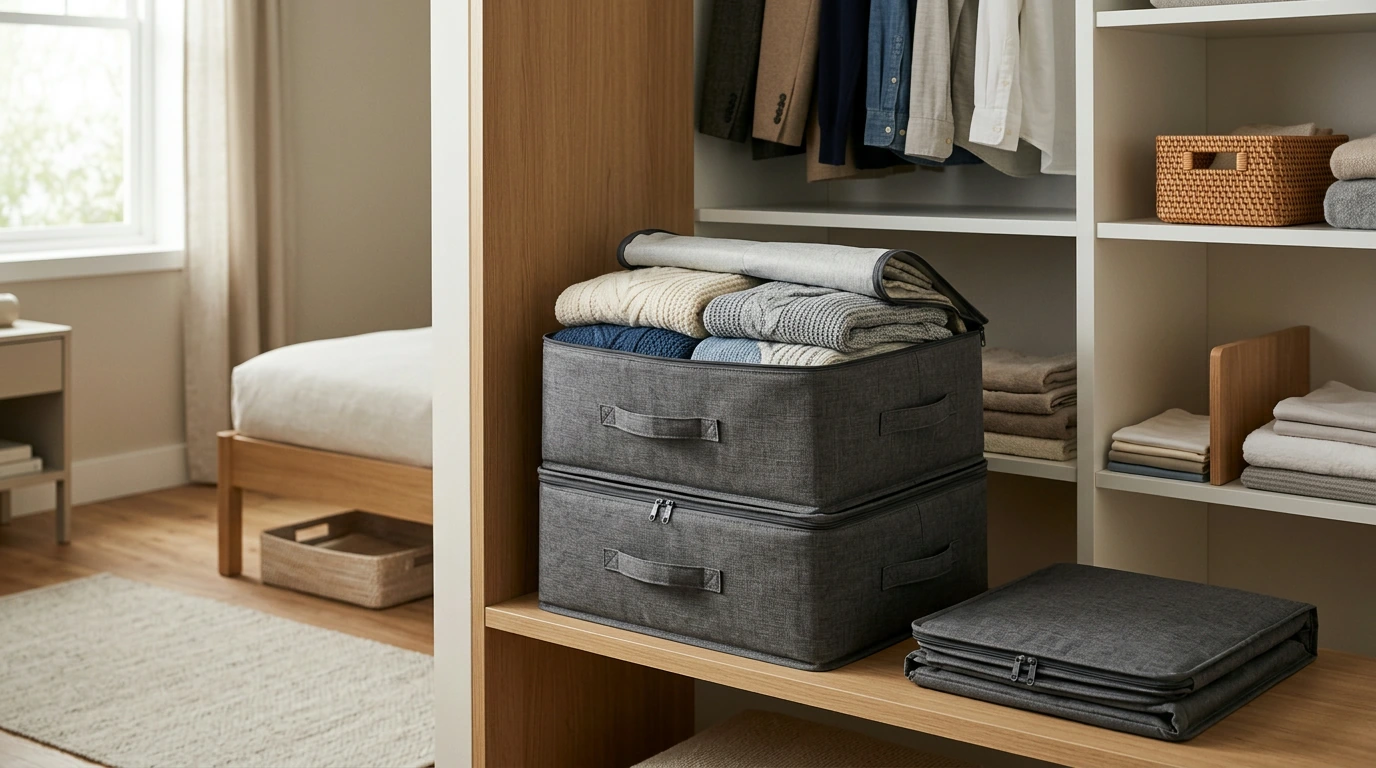
Seasonal quilts, bulky sweaters, and spare linens can take over closets fast. A large-capacity foldable storage bag helps compress visual clutter, keeps fabrics protected from dust, and makes it easier to move items between shelves, under-bed spaces, and storage rooms without re-folding everything.
Instead of piling “extra” bedding on the top shelf (where it slumps, unravels, and collects lint), a structured organizer-style bag turns soft goods into a single, easy-to-grab unit. The result is less rummaging, fewer re-fold sessions, and a cleaner storage area that’s easier to keep consistent week to week.
For quilts and comforters, “large capacity” isn’t only about volume—it’s about practical usability. A bag that’s roomy enough to hold loftier items without forcing the closure helps preserve shape and reduces stress on seams. A foldable build also matters: once the season changes, the empties should disappear into a drawer rather than becoming clutter themselves.
Stack by season (winter quilts on top, summer linens below). Keeping each bag assigned to a season prevents mixed piles and makes swaps quicker when temperatures change.
Store guest bedding where it’s easy to access without consuming the linen closet. One bag can hold a full set (quilt, sheets, pillowcases), so hosting doesn’t require hunting through multiple shelves.
Separate clean spare blankets from daily-use items. This helps avoid the “clean pile” becoming a catch-all zone that’s constantly re-sorted.
Pack textiles early and use them as soft padding in the car or as cushioning around fragile boxed items. A zipped organizer keeps everything contained so it doesn’t unravel mid-move.
Dedicate one bag to outgrown clothing for donation sorting. When it’s full, you have a clear signal that it’s time to drop it off—without overflowing drawers in the meantime.
Moisture control is the most important factor for long-term fabric storage. Dustproof storage helps keep debris off textiles, but mildew prevention depends on dry items and a dry storage location. If a closet tends to run humid, consider periodic airing-out days and avoid placing bags directly against exterior walls. For practical guidance on moisture and mold risks, see the CDC’s mold basics and the EPA guide to mold and moisture.
Use the option that matches the storage location (closet, under-bed, basement) and how often items are accessed. For frequent rotation, prioritize easy access and stackability over maximum compression.
| Option | Best for | Pros | Trade-offs |
|---|---|---|---|
| Foldable storage bag (dustproof organizer) | Quilts, blankets, seasonal clothing | Stackable, portable, keeps dust off, folds away when empty | Not rigid like a bin; avoid overstuffing |
| Plastic bin with lid | Basement/garage storage | Rigid protection, easy to label | Takes space when empty; can trap odors if items aren’t fully dry |
| Vacuum compression bag | Max space saving | Shrinks bulky items dramatically | Less convenient for frequent access; not ideal for delicate loft over long periods |
| Cardboard boxes | Short-term moves | Low cost, easy to find | Not dustproof; vulnerable to moisture and crushing |
If you’re unsure what to prioritize, bedding-specific handling advice can also help you choose a storage approach that fits your rotation schedule. The Sleep Foundation’s bedding storage guide offers clear do’s and don’ts for keeping blankets and comforters fresh between seasons.
Yes—store them clean and completely dry, and avoid over-compressing lofty fills for very long periods. For best results, air them out occasionally and refold to reduce permanent creasing.
It depends on thickness, but a practical estimate is 1–2 bulky comforters or several folded sweaters. Stop before the closure strains or the sides bow excessively, since a slightly flexible bag stacks and closes more reliably.
Dustproof material helps keep debris off fabrics, but mildew prevention depends on dry items and a dry storage area. If your space runs humid, add occasional ventilation time and avoid storing textiles in damp locations.












Leave a comment