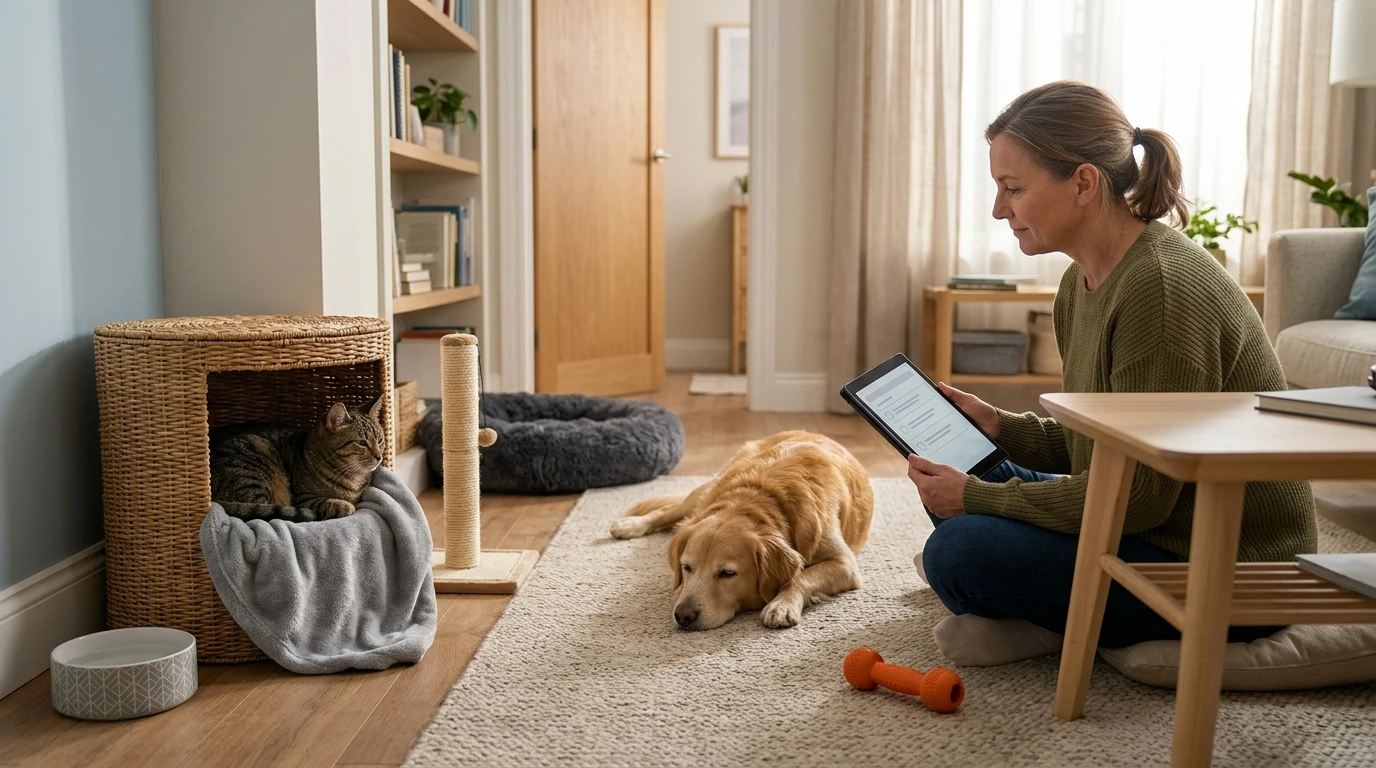
Changes at home, travel, loud noises, new pets, or shifting routines can raise stress levels in cats and dogs—often showing up as subtle behavior shifts before it becomes a bigger wellbeing issue. A structured approach helps: learn common stress signals, track patterns, reduce triggers, and build daily routines that support confidence and comfort. This guide breaks down how to use a simple, repeatable system—especially helpful for cat parents concerned about low mood or withdrawal—and how a ready-to-use digital bundle can keep the process organized.
Stress signals are often mislabeled as “bad behavior,” when they’re frequently a response to discomfort, fear, pain, or a change in the environment. Because many pets try to cope quietly, the earliest signs can be easy to miss until the pattern is well-established.
| Signal | More common in | What it may indicate | Supportive first step |
|---|---|---|---|
| Hiding/withdrawal | Cats | Feeling unsafe, overstimulation, conflict | Create a quiet “safe zone” with hiding options and predictable access to food/water/litter |
| House-soiling or litter box avoidance | Cats | Stress, resource location issues, medical concern | Add a second box in a calm area and schedule a vet check if new or persistent |
| Excessive grooming or licking | Cats & dogs | Self-soothing, anxiety, skin irritation or pain | Reduce triggers, add enrichment, and monitor skin/coat; consult a vet if sores appear |
| Pacing/panting/restlessness | Dogs | Anxiety, insufficient exercise, fear triggers | Offer a decompression walk/sniff time, then a calm routine (mat, chew, quiet space) |
| Sudden irritability or aggression | Cats & dogs | Fear, guarding, pain, overwhelm | Increase distance from triggers, avoid punishment, and seek professional help if escalating |
Cats can show low mood as reduced play, less curiosity, sleeping more, avoiding interaction, or staying in one location for long periods. Some cats look “quiet” rather than actively anxious—especially after a major life change.
For deeper behavior guidance and wellbeing resources, consult reputable references like International Cat Care.
If a ready-to-use system sounds helpful, the Stress Relief Toolkit for Pets – 3-in-1 Digital Bundle | Pet Stress Support, Spotting Feline Depression Guides & Checklist is designed for structured tracking and practical next steps you can repeat during common life disruptions.
If you’re unsure what qualifies as a behavior concern versus a training issue, the American Veterinary Medical Association (AVMA) animal behavior resources are a strong starting point.
For many indoor cats, more vertical space can reduce tension and improve confidence—especially in multi-pet homes. Consider adding a stable climbing and resting area like the Large Multi-Level Cat Tree with Scratching Posts, Caves, and Perches for Indoor Cats to support perching, retreating, and healthy scratching outlets.
If you need specialized help, the American College of Veterinary Behaviorists (ACVB) directory can help you find credentialed support.
A ready-made system is especially helpful when stressors are predictable (travel, guests, schedule changes) or when a cat’s mood seems “off” and you want to monitor patterns with less guesswork. The Stress Relief Toolkit for Pets – 3-in-1 Digital Bundle | Pet Stress Support, Spotting Feline Depression Guides & Checklist is built around a simple loop: observe, record, adjust one variable, and reassess—so you can make changes calmly and track what truly helps.
Give one small change about 3–7 days while tracking daily. Some pets improve quickly, but chronic stress can take weeks; if symptoms worsen or include appetite or litter box changes, contact a veterinarian.
Low mood may look like reduced play and curiosity, withdrawal, sleeping more, appetite changes, and decreased grooming. Because medical issues can look similar, track duration and severity and schedule a vet visit if signs persist or basic habits change.
Track time-of-day patterns, resource locations, household noise/traffic, interactions with other pets, and any health variables (appetite, stool, mobility). If the pattern persists or daily basics shift, a veterinary evaluation can help rule out underlying causes.











Leave a comment