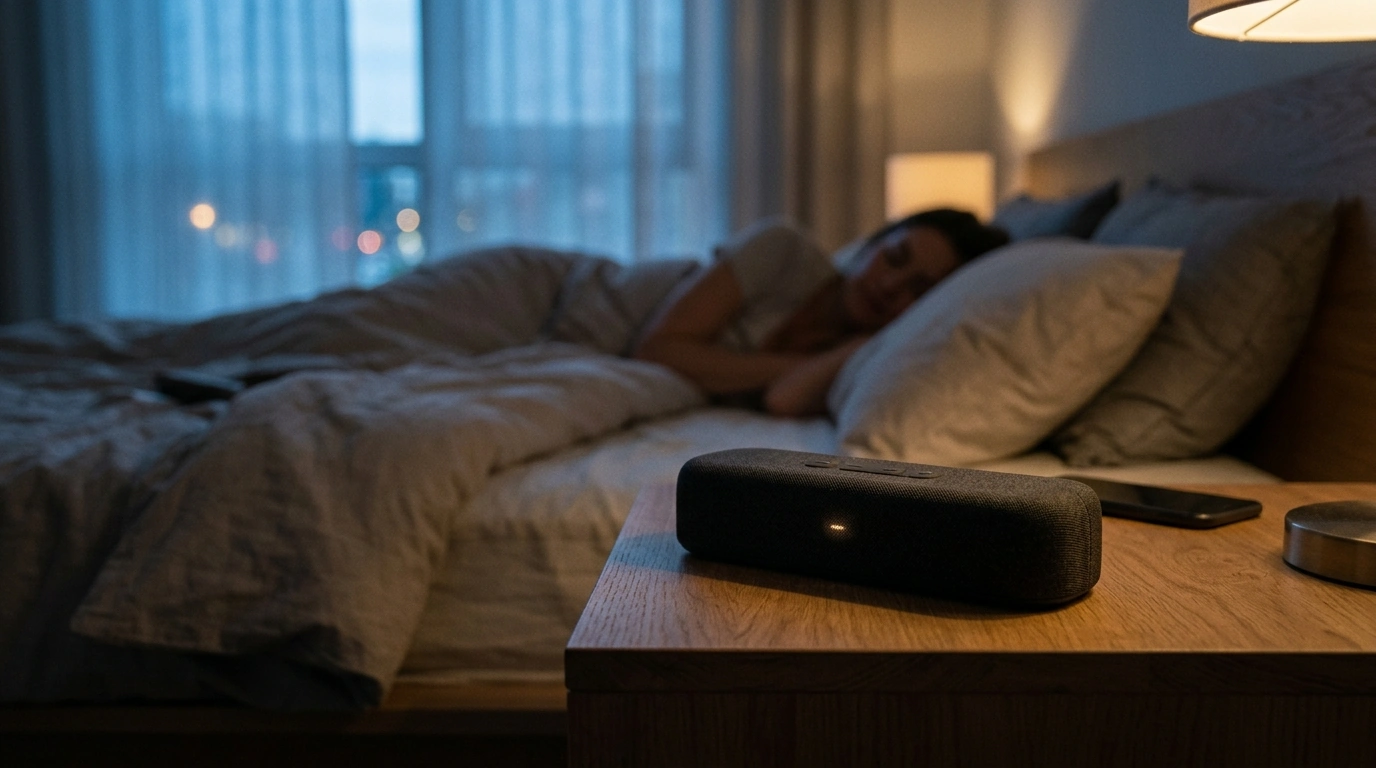
A bedside sound solution can make falling asleep easier without filling the room with loud audio. A bone conduction sleep speaker blends gentle vibrations with Bluetooth playback and built-in white-noise options, while a timer helps audio fade out after bedtime. If the goal is calmer nights—especially in shared bedrooms or noise-prone apartments—this style of compact soundbar can offer a more low-disturbance routine than a traditional speaker.
Most speakers push sound through the air. A bone conduction sleep speaker adds a second pathway: vibration. When placed against a suitable surface (like a solid nightstand or headboard shelf), the device transfers sound through vibrations, aiming for a more private listening feel with less room-filling volume.
White noise can be helpful for masking intermittent sounds (hallway footsteps, neighbors, street traffic). For a deeper overview of how noise affects sleep, see Sleep Foundation’s guide to white noise.
Not all bedside audio devices are equally sleep-friendly. These features tend to matter most when the goal is comfort, consistency, and minimal disruption.
| Option | Best for | Potential drawbacks |
|---|---|---|
| Bone conduction sleep speaker | Lower room volume, personal listening feel, pairing with Bluetooth and timer routines | Placement matters; vibration level may need tuning |
| Traditional bedside speaker | Room-filling sound and simple setup | More likely to disturb a partner or neighbors |
| Earbuds/headphones for sleep | Most private listening and portability | Can be uncomfortable for side sleepers; battery and safety considerations |
Bone conduction-style sound is unusually sensitive to placement. Small adjustments can make a noticeable difference in clarity and how “loud” it feels—without changing your volume setting.
For general guidance on protecting hearing around sound sources, see NIOSH information on noise and hearing loss prevention. Keeping sound at a comfortable, moderate level is typically a better long-term habit than sleeping with loud audio.
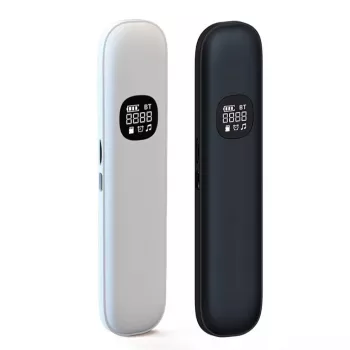
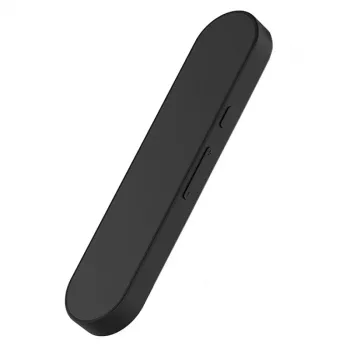
If a dedicated bedside device sounds easier than juggling phone apps and external speakers, the Bone Conduction Sleep Speaker with Timer and Bluetooth – White Noise Soundbar is built around the basics that matter at night: Bluetooth playback, built-in white-noise options, and timer-based shutdown for a cleaner bedtime routine.
| Item | Details |
|---|---|
| Name | Bone Conduction Sleep Speaker with Timer and Bluetooth – White Noise Soundbar |
| Price | $20.97 |
| Availability | In stock |
| Best use | Bedtime audio with timer control and low-disturbance sound |
If racing thoughts or chronic stress are part of the reason sleep feels difficult, pairing a sound routine with a simple self-awareness habit can help. The AI-Powered Burnout Radar digital checklist is a low-lift way to track warning signs and build more intentional recovery time—especially if bedtime is when stress catches up.
It can be less disruptive than a loud bedside speaker because you may not need as much room volume, but placement and vibration strength matter. Start with low settings and test different spots (nightstand vs. headboard shelf) to find the quietest setup for the room.
For many people, white noise at a moderate volume is a comfortable way to mask sudden sounds, and a timer can prevent all-night playback. If you have hearing concerns or a sleep disorder, consider checking with a clinician for personalized guidance.
A common range is 15–60 minutes, depending on how long it typically takes to fall asleep. Try a few options for a week each and keep the one that feels consistent and least distracting.










Leave a comment