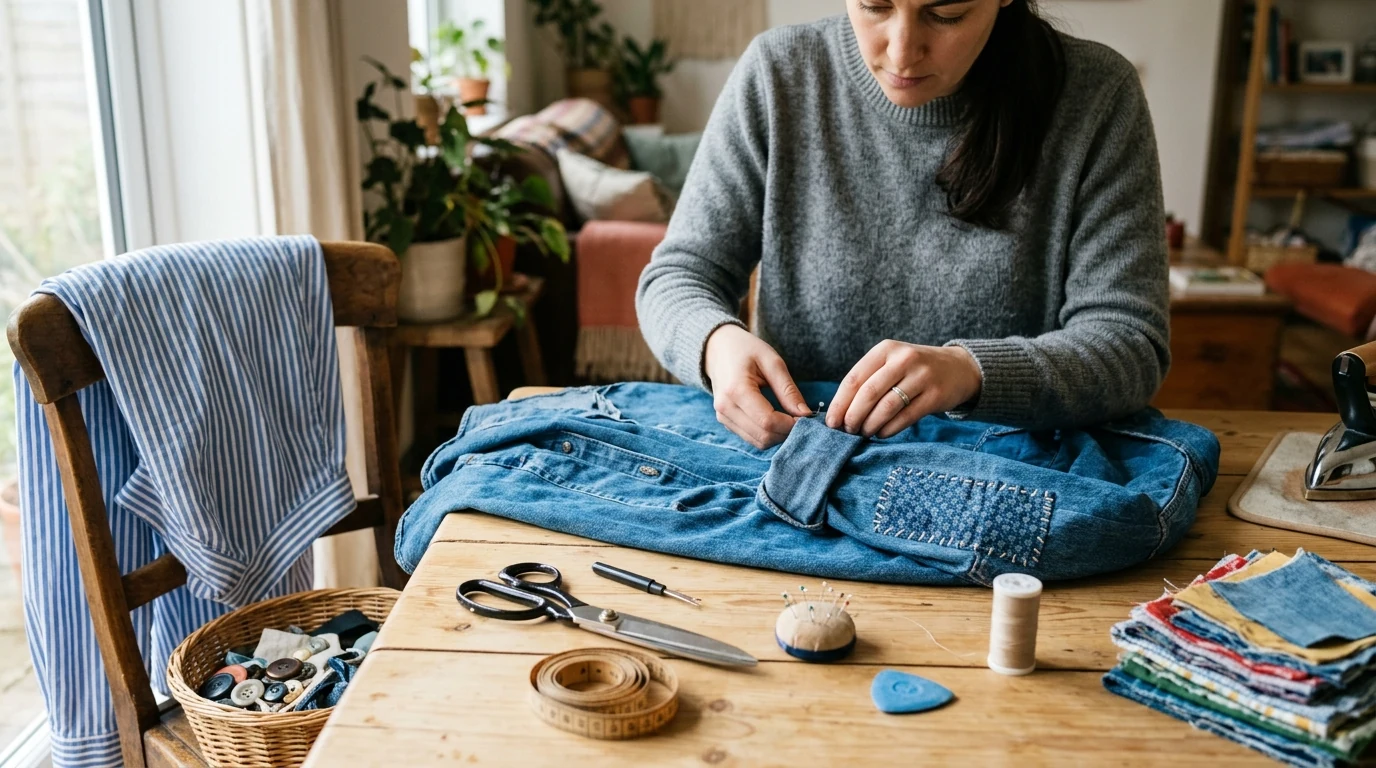
Upcycling turns underused clothing into pieces that feel new again—without starting from scratch. With a few basic tools and simple techniques, beginner-friendly projects can refresh fit, add personality, and extend the life of fabrics already in the closet. The ideas below focus on low-risk changes, clear steps, and practical ways to plan projects so results look intentional and wearable.
A beginner-friendly upcycle is less about “perfect sewing” and more about choosing changes that are easy to control. Straight seams, minimal fitting, and small edits (like shortening, adding a pocket, or patching a worn spot) are forgiving—and often reversible if you don’t love the first try.
Upcycling also saves money and reduces waste by extending garment life and lowering the demand for new materials. If you want a bigger-picture view of textile waste, the U.S. Environmental Protection Agency (EPA) textile data is a helpful reference point.
Start with items that are too big, stained, or out of style—but still have decent fabric and structure. And prioritize comfort and durability: avoid changes that restrict movement or weaken high-stress areas (crotch seams, underarms, seat, elbows). When in doubt, reinforce instead of trimming aggressively.
You can do a lot with a small kit. Core tools include fabric scissors, a seam ripper, pins or clips, measuring tape, tailor’s chalk/marker, an iron, hand-sewing needles, and thread.
Helpful upgrades (nice, not necessary) include a rotary cutter and mat for straighter cuts, a clear ruler, zigzag/pinking scissors to reduce fraying, a thimble, and fabric glue for temporary holds while you pin and stitch.
Save materials from old garments: buttons, zippers, drawstrings, elastic, bias tape, and scraps for patches and pockets. Fusible interfacing is especially useful for stabilizing thin fabric before adding pockets, appliques, or buttonholes.
Fabric-wise, woven cotton and denim are easiest for first projects. Slippery satin and stretchy knits are doable, but they show mistakes faster and can stretch out if you tug while sewing.
Small prep steps make beginner work look cleaner and last longer:
Trim sleeves, keep the cut symmetrical, and reinforce the armholes with a narrow hem, zigzag stitch, or bias tape. If the shirt pulls across the hips, add a small side slit for comfort.
Start with natural fibers, pre-wet evenly, and use rubber bands/strings for simple patterns. For more context on circular fashion and why keeping textiles in use matters, the Ellen MacArthur Foundation’s textiles work is a solid overview.
| Project | Time | Skill | Tools | Best fabric | Notes |
|---|---|---|---|---|---|
| T-shirt to tank | 30–60 min | Easy | Scissors, pins, needle/thread or machine | Cotton jersey | Finish edges with a narrow hem or zigzag |
| Jeans to shorts | 45–90 min | Easy | Scissors, ruler, chalk, iron | Denim | Cut long first; refine length after trying on |
| Dress to skirt (elastic waist) | 60–120 min | Easy–Medium | Seam ripper, elastic, machine | Woven cotton, rayon | Stabilize waist edge before adding casing |
| Patch mend | 45–120 min | Easy | Scraps, needle/thread, iron | Denim, canvas | Reinforce from inside, then stitch on top |
| Add patch pockets | 45–90 min | Easy | Scraps, interfacing, iron | Most wovens | Topstitch for durability |
If a clear project flow helps—choose, prep, cut, stitch, finish—a structured guide can keep early attempts fun instead of frustrating. The Upcycle Clothing Ideas for Beginners (digital download) is designed for simple transformations and includes planning prompts so you can map out tools, measurements, and finishing choices before you cut.
For a broader “refresh” mindset that pairs well with a simplified wardrobe, Glow for Less – Budget Beauty Guide Ebook is a practical add-on for building routines without overbuying.
Oversized tees, roomy button-ups, denim with extra space, and simple woven dresses are the easiest because stable fabrics and relaxed fits are more forgiving. Avoid very slippery fabrics or clingy stretch pieces until you’ve practiced basic cutting, pressing, and seam finishing.
No—many projects work with hand-sewing using running stitch, backstitch, and whip stitch, especially for patches, simple hems, and pocket repairs. A machine helps most with long hems, thick denim, and elastic casings, but it’s not required to get started.
You can fold and stitch a simple hem, add a line of straight stitches near the edge to stabilize, or bind the edge with bias tape. If you have pinking shears, they help reduce fraying, and reusing an existing hem is often the cleanest beginner shortcut.










Leave a comment