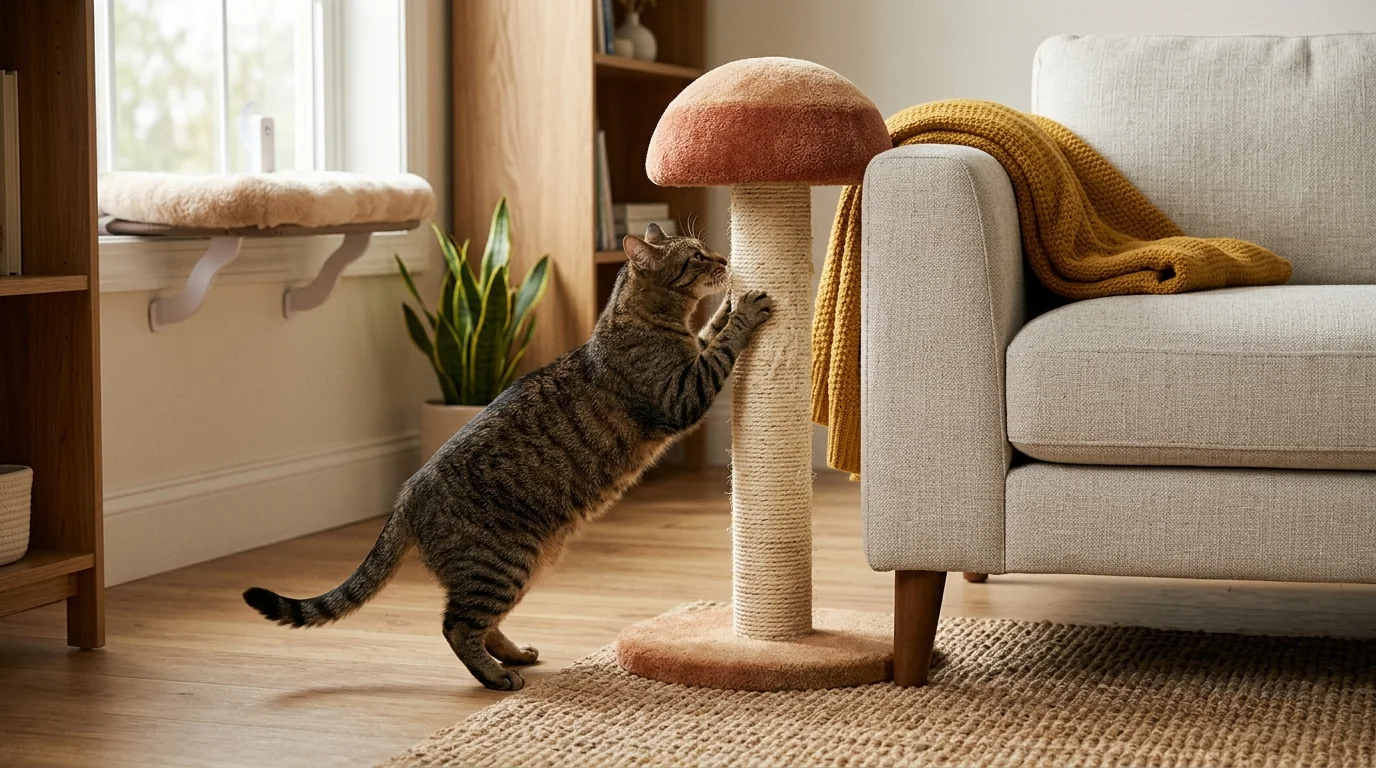
A scratching post can be both functional and adorable. A mushroom-themed scratcher gives cats a satisfying place to claw, stretch, and play—while fitting into cozy, cute home decor and helping reduce damage to furniture, rugs, and doorframes. The key is offering a scratch spot that feels “right” to your cat and placing it where it naturally solves the problem.
Scratching isn’t misbehavior—it’s a normal, healthy routine. Cats scratch to maintain their claws, stretch their bodies, and communicate through both visible marks and scent from glands in their paws.
For more behavior context, resources like the ASPCA guide to destructive scratching and International Cat Care’s scratching behavior overview explain why scratching is essential and how to manage it positively.
Not every cat accessory needs to look utilitarian. A mushroom-style scratching post can blend into a room like a plush accent, which is especially helpful in small spaces or carefully styled homes.
Placement is often the difference between “ignored scratcher” and “daily habit.” Instead of choosing a spot that’s convenient only for people, think like a cat: proximity, routine, and sightlines matter.
Most cats can be guided toward the “right” scratching surface with simple, reward-based steps. The goal is to make the scratcher more satisfying than the couch—without forcing or scolding.
If you’re weighing alternatives to declawing, the American Veterinary Medical Association (AVMA) declawing policy provides helpful context on why scratching solutions and behavior management matter.
| Type | Best for | Good placement | Notes |
|---|---|---|---|
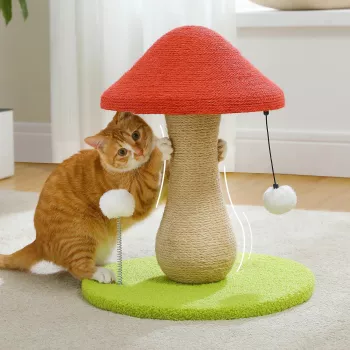
| Mushroom-style scratching post | Cats that enjoy a cute, cozy scratch spot and light play | Living room corners, near a couch, beside a cat bed | Great for decor; reinforce use with rewards early on |
| Tall vertical post | Big stretches, strong scratchers, multi-cat homes | Near main traffic areas and by favorite lounging spots | Prioritize stability and height so the cat can fully extend |
| Horizontal scratch pad | Cats that prefer ground scratching or rug scratchers | Next to rug edges or near nap spots | Replaceable pads can be convenient for heavy use |
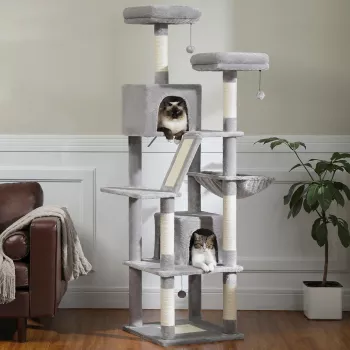
| Cat tree with multiple scratch zones | Climbing, perching, scratching, and hiding | A main room wall area or near a window | Higher cost and footprint, but combines multiple needs |
Put it close to the current scratching hotspot, then reward any interaction immediately with treats or play. Use catnip or a toy to guide scratching motions, and temporarily make the old target less appealing with a cover or double-sided tape.
Place it near where your cat already scratches and close to rest zones since many cats scratch after waking. Social areas like living rooms often work well because the scratching gets noticed and reinforced.
Often it’s not—many cats do better with at least two scratching locations, especially in larger spaces or multi-cat homes. A common setup is one in the main living area and one near a sleeping or napping spot.










Leave a comment